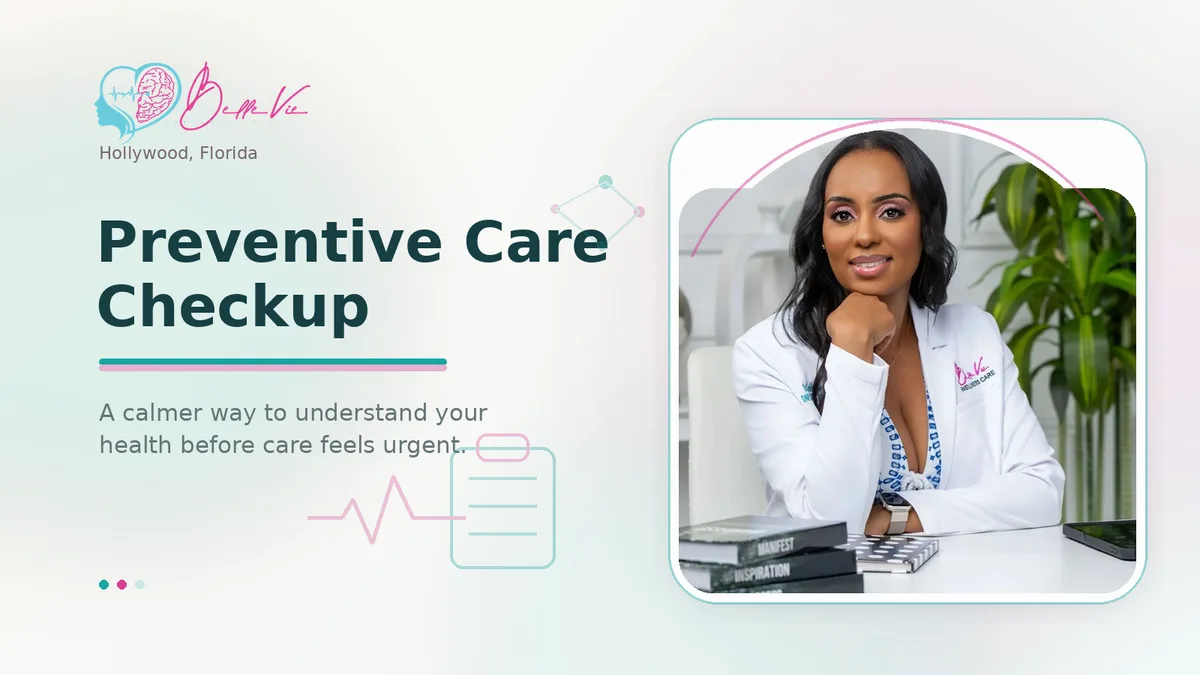
Your 2026 Preventive Wellness Checkup: Labs, Screenings, and Follow-Up That Make Care Personal
June 6, 2026
Wellness trends change quickly. One month everyone is talking about wearable data. The next month the conversation shifts to peptides, GLP-1 medications, sleep scores, hormone testing, or advanced lab panels.
But one trend is worth keeping: using preventive care to understand your health before something feels urgent.
A preventive wellness checkup is not only a quick visit when you feel fine. It is a chance to review your history, update screenings, discuss symptoms you may have been ignoring, look at risk factors, and decide whether blood work and labs could help guide a more personalized care plan. For patients in Hollywood, Florida, that kind of visit can be a practical first step toward whole-person wellness.
Why preventive care still matters in 2026
The CDC explains that routine preventive care can help people stay well and catch problems early. Preventive visits are different from appointments for an illness or injury. They focus on what can be reviewed, monitored, updated, or addressed before a concern becomes harder to manage.
That can include:
- Blood pressure checks
- Lab review
- Medication and supplement review
- Family history updates
- Vaccination discussion
- Mental health screening
- Cancer screening reminders
- Nutrition, movement, sleep, and stress conversations
- Follow-up planning
The goal is not to order every test for every person. The goal is to match the visit to your age, health history, symptoms, risk factors, medications, and goals.
Screenings are not one-size-fits-all
Many patients hear the word “screening” and think of a long generic checklist. In reality, preventive screening is most useful when it is personalized.
The U.S. Preventive Services Task Force lists highly recommended preventive services across areas such as blood pressure, diabetes risk, depression, colorectal cancer, breast cancer, cervical cancer, tobacco use, and cardiovascular risk. Which recommendations apply to you depends on details such as age, sex, pregnancy status, family history, symptoms, risk factors, and previous results.
For example, a patient with a family history of diabetes may need a different conversation than someone whose main concern is fatigue, stress, blood pressure, menopause symptoms, medication side effects, or weight changes. A useful checkup makes room for those differences.
Labs can turn vague symptoms into better questions
People often come in with concerns that are real but hard to describe: low energy, weight changes, brain fog, poor sleep, cravings, mood shifts, hair shedding, reduced exercise tolerance, or a general sense that something feels off.
Labs do not replace a full medical evaluation, but they can help organize the conversation. MedlinePlus notes that medical tests may be used to detect a condition, support diagnosis, plan treatment, check whether treatment is working, or monitor health over time.
Depending on the patient, a provider may discuss labs related to:
- Blood sugar and metabolic health
- Cholesterol and cardiovascular risk
- Thyroid function
- Kidney and liver function
- Nutrient status
- Hormone patterns when clinically appropriate
- Inflammation markers when appropriate
- Medication monitoring
The most important part is interpretation. A number on a lab report should be connected back to your symptoms, health history, medications, lifestyle, and goals. That is where provider-guided care matters.
Preventive care can support weight, energy, and metabolic health
Preventive visits are especially helpful when you are thinking about weight, appetite, energy, or metabolic wellness. A patient exploring medical weight loss or GLP-1/GIP therapy should not only be evaluated by weight alone.
A stronger conversation may include blood pressure, blood sugar patterns, cholesterol, medication history, digestive symptoms, nutrition, protein intake, strength, sleep, mood, and readiness for follow-up. For some patients, lab-guided care helps identify issues that may affect cravings, fatigue, weight changes, or medication tolerance.
The HealthCare.gov preventive care list includes several adult preventive services relevant to long-term wellness, such as blood pressure screening, cholesterol screening for adults of certain ages or higher risk, Type 2 diabetes screening for certain adults, depression screening, tobacco use screening, and obesity screening and counseling. Those topics often overlap with the reasons patients seek wellness care in the first place.
Mental health belongs in the wellness conversation
Preventive care is not only physical. Stress, depression, anxiety, poor sleep, grief, burnout, and life transitions can affect energy, appetite, motivation, focus, relationships, and chronic disease management.
The USPSTF includes adult depression screening among its recommended preventive services, and that matters because many people do not bring up mood symptoms unless they are directly asked. A wellness visit can create space to talk about how you are actually functioning, not just whether your lab numbers are in range.
BelleVie Wellness Care offers mental health services as part of a broader whole-person approach, including medication management and psychotherapy when appropriate. For many patients, physical health and emotional health are connected enough that separating them misses part of the picture.
What a personalized preventive wellness visit may include
A thoughtful preventive visit is structured, but it should not feel rushed or generic. Depending on your needs, it may include:
Your story. What has changed since your last visit? What are you worried about? What are your goals for the next few months?
Risk review. Family history, medications, allergies, lifestyle patterns, previous diagnoses, and prior test results can all affect what should be checked.
Screening review. Your provider can help identify which age-appropriate or risk-based screenings are due, overdue, or not currently needed.
Lab discussion. Some patients need routine monitoring. Others need targeted labs based on symptoms, medications, or wellness goals.
Care planning. A good visit should end with next steps: what to monitor, what to change, what to recheck, when to follow up, and when to seek care sooner.
When should you schedule a wellness checkup?
You do not have to wait until something feels serious. Consider scheduling a preventive wellness visit if:
- It has been more than a year since your last checkup
- You have a family history of diabetes, heart disease, cancer, thyroid disease, or autoimmune disease
- Your energy, mood, sleep, appetite, or weight has changed
- You are considering medical weight loss, peptide therapy, hormone evaluation, or IV wellness services
- You take medications that need monitoring
- You want help understanding prior lab results
- You want a provider-guided wellness plan instead of guessing from online advice
If you have severe symptoms, chest pain, shortness of breath, neurologic symptoms, suicidal thoughts, or any urgent concern, seek emergency or urgent medical care right away.
BelleVie Wellness Care can help
BelleVie Wellness Care offers concierge medicine and wellness, blood work and labs, medical weight loss, GLP-1/GIP therapy, mental health services, and personalized wellness support in Hollywood, Florida.
If you are ready to move from guessing to a clearer care plan, schedule a consultation. BelleVie Wellness Care can help.
Educational information only. Not medical advice. Individual results may vary. Treatment eligibility and outcomes depend on provider evaluation.