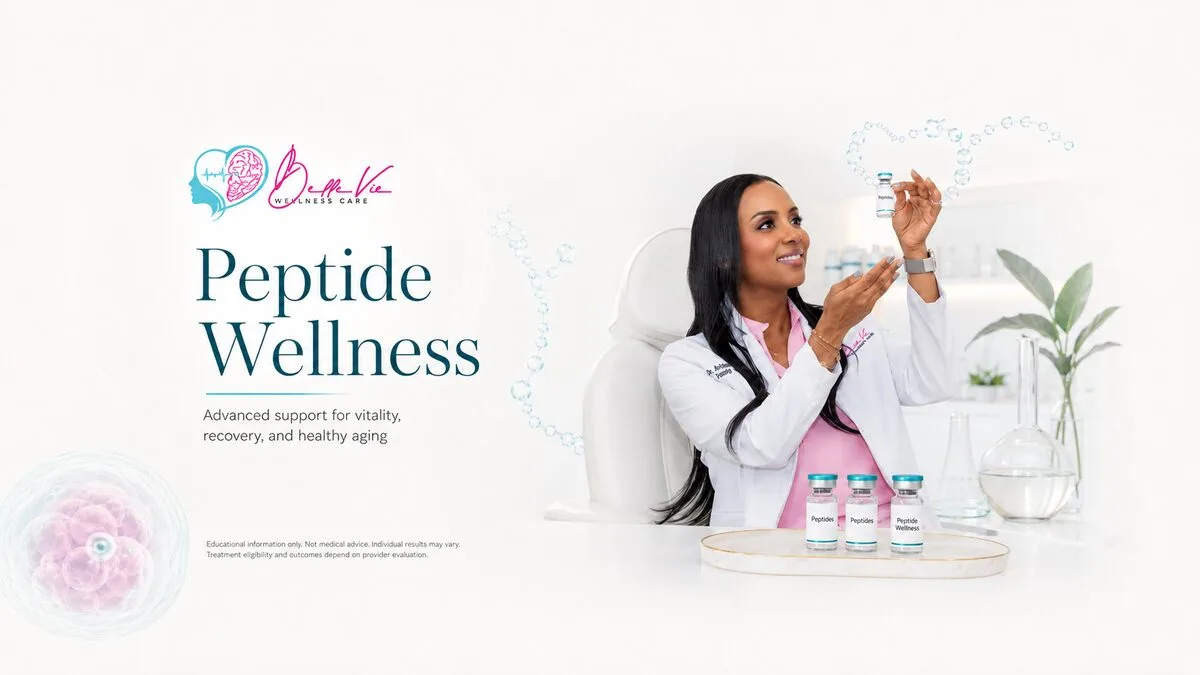
Peptides Are the Biggest Wellness Trend of 2026. Here Is What You Should Know
May 28, 2026
If you follow health and wellness news at all, you have probably noticed peptide therapy showing up everywhere in 2026. Major outlets from Vogue to Outside to the Global Wellness Summit have named peptides one of the most talked-about wellness trends of the year, and for good reason.
Peptides are short chains of amino acids that act as signaling molecules in the body. They tell your cells to do specific things: repair tissue, reduce inflammation, support metabolism, improve skin elasticity, sharpen focus, or regulate sleep. Unlike broad supplements or one-size-fits-all approaches, peptides tend to be targeted. Different peptides do different things depending on what your body needs.
But with all the buzz comes a lot of noise. Social media has made peptides sound like a miracle cure for everything. The reality is more nuanced, and the most important factor is medical guidance. Not all peptides are created equal, and not every peptide is right for every person.
Here is a breakdown of what is driving the trend and how peptide therapy works in a clinical setting.
What is driving the peptide trend in 2026
Several converging factors have pushed peptides into the mainstream this year.
The GLP-1 ripple effect. The explosion of GLP-1 and GLP-1/GIP therapies like semaglutide, tirzepatide, and retatrutide has made the general public far more aware of peptide-based treatments. People who started with metabolic health are now discovering that peptides go far beyond weight management. Once you understand that a peptide can influence appetite and blood sugar, it is a short jump to wondering what other peptides can do for recovery, skin, cognition, or energy.
The longevity movement. There is growing interest in healthy aging, not just living longer but living better. Peptides like NAD+, Epithalon, MOTS-C, and SS-31 are being researched for their potential to support mitochondrial function, cellular repair, and energy metabolism. As the longevity space grows, so does interest in cellular-level wellness.
Recovery and performance. Weekend athletes, CrossFit enthusiasts, runners, and people recovering from injuries have been driving interest in recovery-focused peptides. BPC-157 and TB-500, in particular, have become widely discussed for their potential to support soft tissue, tendon, ligament, and joint recovery.
Skin and beauty. Peptides have been quietly used in high-end skincare for years, but 2026 is the year they moved beyond topical creams. Injectable options like GHK-Cu, often called the copper peptide, are gaining attention for collagen support, skin elasticity, and visible rejuvenation.
The main categories of peptide therapy
Peptide therapy is not one thing. It is a category that covers a wide range of goals. Here is a simple way to think about it:
Metabolic peptides. These include GLP-1 and GLP-1/GIP therapies like semaglutide, tirzepatide, and retatrutide, as well as compounds like AOD-9604 and tesamorelin. They are primarily used to support appetite control, metabolic health, and body composition.
Recovery and tissue support. BPC-157, TB-500, and their blends are commonly discussed for muscle, tendon, ligament, and joint recovery. These are the peptides that weekend warriors, post-surgery patients, and people managing chronic discomfort tend to ask about.
Cellular health and aging. NAD+, Epithalon, MOTS-C, and SS-31 support mitochondrial function, energy production, and cellular repair. These are the ones most closely tied to the longevity movement.
Skin and beauty. GHK-Cu (copper peptide) and glutathione support collagen production, skin elasticity, oxidative stress balance, and visible rejuvenation. Some are available as injectables or IV options.
Cognitive and mood. Selank and Semax are peptides that support mental clarity, focus, stress resilience, and mood balance. They are different from traditional psychiatric medications and work through their own mechanisms.
Sexual wellness. PT-141 is a peptide that may support libido, arousal, and intimacy in eligible patients after provider evaluation.
Why medical guidance matters
This is the part that gets left out of social media posts.
Peptides are powerful signaling molecules, and they work best, and safest, when prescribed thoughtfully. A responsible provider does not simply hand you a peptide based on what you saw online. They ask about your full health history, current medications, lifestyle, symptoms, and goals. They review labs when appropriate. They consider contraindications and drug interactions. And they build a monitoring plan so your care can be adjusted over time.
Some peptides are not appropriate for certain medical conditions. Others do not mix well with specific prescription medications. Some have not been researched enough to recommend in certain populations. A medical evaluation protects you from wasting time and money on the wrong option, and from overlooking something important about your health.
At BelleVie Wellness Care, peptide conversations start with your story, not with a product list. Your provider walks through your health history, medications, lifestyle, and goals before any recommendation is made. Some peptide options may require lab testing or additional documentation to confirm they are appropriate for you.
Peptide therapy in 2026: what to expect
If you are curious about peptide therapy, here is how a responsible visit typically works:
The first step is a consultation. Your provider sits down with you, in person or via telehealth, to talk through your symptoms, goals, health history, and wellness priorities.
Next, a medical review. Your provider checks current medications, risk factors, and potential contraindications. This is where most of the safety work happens.
If needed, labs or documentation. Some therapies require lab work to confirm that a peptide is safe and appropriate for you.
Then a personalized recommendation. If peptide therapy is a good fit, your provider recommends a specific option, dosing plan, and follow-up schedule.
Finally, monitoring. Your care does not end when you start therapy. Regular follow-ups allow your provider to assess how you are responding, adjust dosing, and manage any questions that come up.
Peptide therapy is not for everyone, and that is okay
One of the healthiest trends of 2026 is the move away from wellness-as-miracle-cure. The best care is the care that fits you: your body, your health history, your goals, and your comfort level.
Peptide therapy works well for many people, but it is not a substitute for good sleep, balanced nutrition, stress management, exercise, or mental health care. The most effective wellness plans usually combine medical support with sustainable daily habits.
If you are curious whether peptide therapy might fit into your health picture, a consultation is a low-pressure way to find out.
BelleVie Wellness Care can help
BelleVie Wellness Care offers provider-guided peptide therapy in Hollywood, Florida, with options across metabolic health, recovery, cellular wellness, skin and beauty, cognitive support, and more.
Whether you are exploring recovery peptides like BPC-157 and TB-500, beauty-focused options like GHK-Cu, cellular health support like NAD+ or Epithalon, cognitive options like Selank or Semax, or any other peptide option, your care begins with a conversation, not a catalog.
BelleVie also offers IV therapy, NAD+ therapy, glutathione therapy, medical weight loss, GLP-1/GIP therapy, and whole-person wellness services that can complement a peptide plan when appropriate.
If you are ready to explore peptide therapy with a provider who takes the time to understand your health, schedule a consultation today.